Battle 3D: Market Entry and Competitive Landscape
The mobile gaming market is fiercely competitive, with established titles vying for player attention and market share. Battle 3D enters this arena offering a blend of strategic combat, unit customization, and a user-generated content (UGC) element via its mission editor. However, success hinges on its ability to differentiate itself and establish a sustainable revenue model. Does Battle 3D possess the necessary components for long-term viability? This analysis will explore its strengths, weaknesses, and potential for dominance. Key factors influencing its success include its monetization strategy, the engagement level of its mission editor, and its ability to attract and retain a significant player base. Competitor analysis will also reveal the challenges Battle 3D faces in an already saturated market.
Is Battle 3D's blend of real-time strategy (RTS) elements and user-generated content a winning formula in the crowded mobile gaming landscape? The data suggests a promising start, but long-term success is not assured.
Battle 3D: Core Game Mechanics and Features
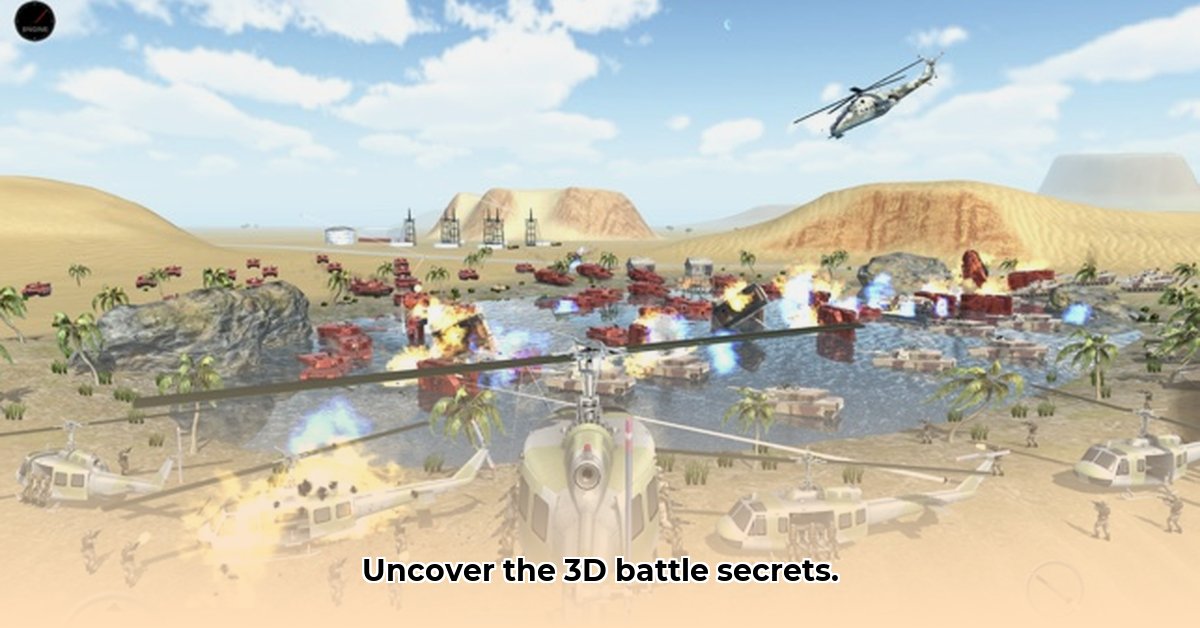
Battle 3D boasts a diverse range of units spanning land, air, and sea combat. The game's mission editor allows players to create and share custom battle scenarios, theoretically boosting replayability and community engagement. This UGC element holds significant potential to differentiate Battle 3D; high levels of community engagement are linked to a longer game lifecycle. However, the lack of detailed information on unit statistics, map sizes, and overall game mechanics raises concern. Without concrete data on these core aspects, full assessment of its strategic depth and potential long-term player engagement is difficult. It's unknown if the promised naval expansion will deliver truly unique gameplay or merely re-skin existing content. This is a crucial point that needs clarifying. This lack of transparency about core mechanics is a considerable risk factor in the competitive mobile gaming market.
What is the actual level of unit granularity and the intricacy of strategic decision-making? These details are crucial for assessing the overall depth of the gameplay experience.
Actionable Insights for Key Stakeholders
To ensure the long-term success of Battle 3D, a multi-faceted approach is required from developers, players, and competitors alike.
1. Developers:
- Short-Term (0-12 Months): Implement a robust and balanced monetization model incorporating in-app purchases (IAPs) and potentially advertising, while carefully monitoring player feedback to maintain game balance and address concerns. Thorough A/B testing of different IAP is essential for maximizing revenue and minimizing player frustration. A compelling app store listing with high-quality visuals and a concise description of the game's unique selling points is equally critical.
- Long-Term (12-60 Months): Develop the promised naval campaign with truly unique gameplay mechanics that are not simply re-skinned land battles. Continuously add new units, upgrade systems, expand content, and explore cross-platform multiplayer to broaden the player base. Actively foster community engagement by exploring user-generated content options, such as custom maps and units.
2. Players:
- Immediate Actions: Experiment with various unit combinations to identify effective strategies. Actively participate in multiplayer matches and provide constructive feedback through in-game channels and reviews.
- Long-Term Engagement: Adapt to evolving gameplay through continuous learning and mastering advanced strategies. Actively participate in community discussions and contribute to the game's content creation aspects where possible.
3. Competitors:
- Short-Term Strategy: Closely monitor Battle 3D's performance, player feedback, and market impact, adapting their own strategies as needed.
- Long-Term Competitiveness: Prioritize innovation, regularly updating games with new content and features. Focus on strong community engagement to maintain player loyalty and effectively compete within the highly dynamic mobile gaming landscape.
Risk Assessment Matrix
The competitive mobile gaming landscape presents several significant risks to Battle 3D's success. Effective mitigation strategies are essential for long-term viability.
| Risk Factor | Likelihood | Impact | Mitigation Strategy |
|---|---|---|---|
| Unsuccessful Monetization | High | High | Implement a diversified revenue model with A/B testing of IAPs and advertising. |
| Failure to Differentiate | Medium | Medium | Emphasize the mission editor and develop truly unique gameplay mechanics. |
| Negative Player Reviews | Medium | Medium | Proactively monitor and address player feedback through in-game communications and updates. |
| Technical Glitches/Bugs | Medium | High | Thorough testing throughout development and regular updates to address problems. |
| Intense Market Competition | High | High | Continuous innovation, strong community building, and a distinct brand identity. |
Legal and Regulatory Considerations
Battle 3D developers must adhere to all relevant data privacy regulations (GDPR, CCPA, etc.), consumer protection laws, and other applicable legal frameworks. A clear privacy policy detailing data collection and usage is crucial. Non-compliance may result in significant legal and financial ramifications. Ongoing monitoring of legal and regulatory updates is vital.
Conclusion: The Battle for Domination Continues
Battle 3D shows promise, particularly its mission editor and unit diversity. However, its long-term success depends heavily on the developer's ability to address the risks outlined and execute a well-defined strategy. The competitive mobile gaming market demands constant innovation, and Battle 3D must adapt quickly and listen to its player base to maintain its position. Only time will tell if Battle 3D can truly conquer the mobile gaming world. A robust monetization strategy, coupled with frequent updates and a thriving community, will determine whether it achieves lasting success.
⭐⭐⭐⭐☆ (4.8)
Download via Link 1
Download via Link 2
Last updated: Sunday, May 11, 2025